

Blood Moon: Why the Moon Turns Red and When the Next Ones Are
By KosmoHow Kosmo makes its readings
“Blood moon” is the popular name for a total lunar eclipse, when the full Moon passes completely into Earth’s darkest shadow and glows orange to deep red. There is no blood moon in 2027: all three lunar eclipses that year are penumbral. After the total eclipse of 3 March 2026, NASA’s next total lunar eclipse is on 31 December 2028.
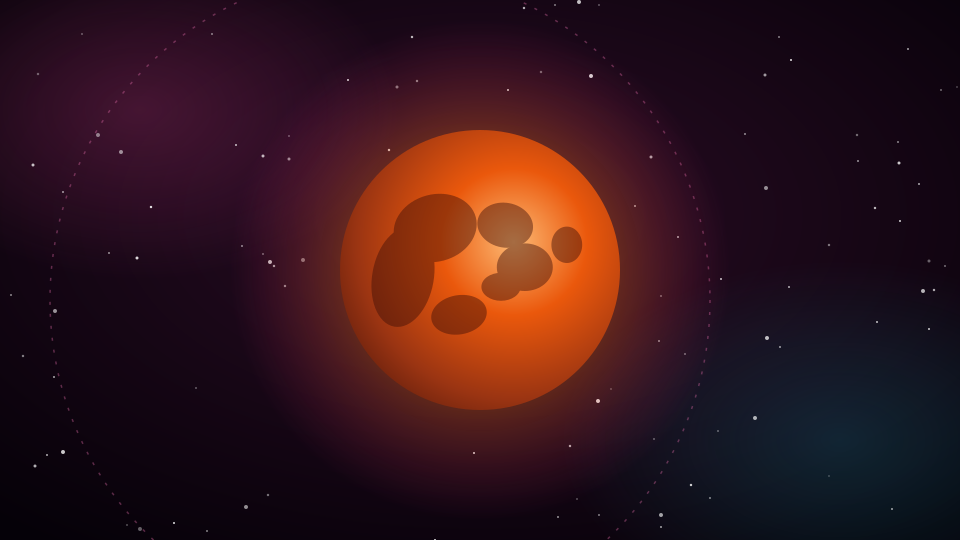
Why the Moon turns red
Inside Earth’s umbra, the Moon receives no direct sunlight. Some light still reaches it after passing through Earth’s atmosphere, which scatters blue light away and lets orange and red light through, the same reason sunsets look red. NASA describes it as all the world’s sunrises and sunsets projected onto the Moon. The more dust or cloud in the atmosphere, the darker and redder the eclipse can look.
Which eclipses count as a blood moon
- Total lunar eclipse: the whole Moon sits inside the umbra and turns orange, red or brownish. This is a blood moon.
- Partial lunar eclipse: only part of the Moon enters the umbra. A dark bite appears, sometimes with a reddish tint, while the rest stays bright.
- Penumbral lunar eclipse: the Moon passes only through the pale outer shadow. It greys slightly and never turns red.
A total lunar eclipse always begins and ends with partial phases, so the red colour builds gradually and fades again.
Total lunar eclipses, 2026 to 2029
| Greatest eclipse (UT) | Total phase (UT) | Moon overhead at greatest eclipse |
|---|---|---|
| Mar 3, 2026, 11:34 UTC | 11:04 to 12:03 | Central Pacific Ocean |
| Dec 31, 2028, 16:52 UTC | 16:16 to 17:28 | Southern China and northern Vietnam |
| Jun 26, 2029, 03:22 UTC | 02:31 to 04:13 | Southern Brazil |
| Dec 20, 2029, 22:42 UTC | 22:15 to 23:09 | Central Sahara |
Anyone on the night side of Earth can see the total phase, and places near the point listed in the last column see the Moon highest. NASA’s map for each eclipse shows where it is visible. The penumbral eclipses of 2027 are covered in the lunar eclipse guide.
How to watch a blood moon
- A lunar eclipse is completely safe to watch with your bare eyes.
- Find a clear view of the Moon. A dark sky is not required, but it makes the colour stand out.
- Binoculars bring out the colour and the brighter edge of the shadow.
- For photos, use a tripod: the eclipsed Moon is far fainter than an ordinary full Moon.
Blood moons in astrology
This is optional symbolism. Astrologers often read a total lunar eclipse as a heightened full Moon, linked with release and endings. Treat it as a reflective prompt; an eclipse does not predict events or relationships.
Common questions
Will there be a blood moon in 2027?
No. The lunar eclipses of 20 February, 18 July and 17 August 2027 are penumbral and do not turn the Moon red.
Is every supermoon a blood moon?
No. A supermoon is about distance, while a blood moon needs a total lunar eclipse. The two sometimes coincide, but they are separate events.
How long does a blood moon last?
The total phase lasts from a few minutes to more than an hour and a half. On 26 June 2029 it runs from 02:31 to 04:13 UT, and on 31 December 2028 from 16:16 to 17:28 UT.