

Kosmo NewsConjunction
Mars and Jupiter Meet in November 2026: What a Conjunction Means
Mars and Jupiter appear 1.2 degrees apart before dawn on 15–16 November 2026. Why the astronomical and astrological times differ, and how to see them.
By KosmoHow Kosmo makes its readings
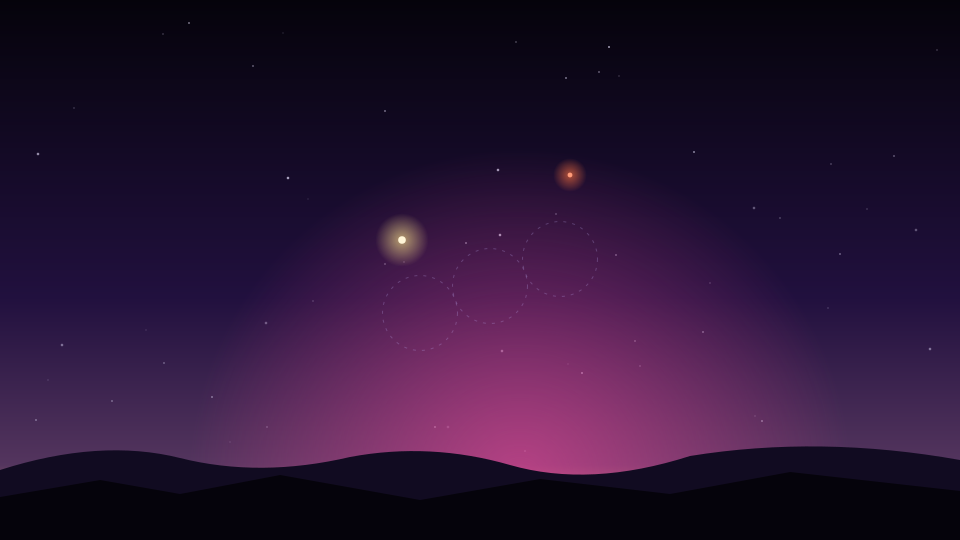
Before sunrise on 15 and 16 November 2026, Mars and Jupiter appear about 1.2 degrees apart in the southeastern sky, a little more than the width of two full Moons. NASA highlights the pairing in its November skywatching tips. Depending on how you measure it, the conjunction is exact on 15 or on 16 November, and the difference is worth understanding.
Two definitions, two times
| Measure | Exact (UTC) | What it means |
|---|---|---|
| Right ascension (astronomy) | Nov 15, 2026, 02:28 UTC | Same east–west position measured along the celestial equator; Mars is about 1.25 degrees north of Jupiter. |
| Ecliptic longitude (astrology) | Nov 16, 2026, 06:21 UTC | Both planets at the same zodiac degree, about 25°53′ Leo. |
| Closest apparent approach | Nov 16, 2026, 02:00 UTC | Smallest separation, about 1.2 degrees. |
The ecliptic conjunction was checked against NASA JPL Horizons, which gives 06:20 UTC. Astronomers usually quote conjunctions in right ascension; astrologers use ecliptic longitude, because the zodiac is measured along the ecliptic. Neither is wrong, but the two should not be mixed.
How to see it
Look southeast in the hour before sunrise on 15 and 16 November. Jupiter is the brighter of the two, at about magnitude −2.1; Mars, at about magnitude 0.7, is the reddish point beside it. Both are easy to see without binoculars, and NASA suggests watching over several mornings as they draw together and then separate.
- Binoculars show both planets in the same view and may reveal Jupiter’s largest moons as tiny points beside it.
- Choose a place with a clear view toward the southeast, away from tall buildings.
- The Moon is not in the way: it is a crescent in the evening sky and sets before the planets are best placed.
The pair is close only in perspective. On 16 November Mars is about 195 million km from Earth and Jupiter about 788 million km, roughly four times farther away.
What a conjunction means in astrology
In astrology, a conjunction blends the meanings of the planets involved. Mars stands for drive, desire and courage; Jupiter for growth, confidence and generosity. Their meeting is traditionally read as energy that wants to expand: enthusiasm, bold plans and a push to act on something big. Leo, the sign where they meet, adds warmth, creativity and the wish to be seen.
Astrologers also note the flip side: Mars and Jupiter together can be read as overconfidence or taking on too much. It is a symbolic lens, not a forecast. Mars and Jupiter meet roughly every two years, so this is a recurring theme rather than a once-in-a-lifetime event.
A reflection for relationships
If the symbolism speaks to you, use it to ask what you would like to build with someone, and which plan would benefit from both courage and generosity. Mars enters Virgo on 25 November, which astrologers read as a shift from big gestures to practical follow-through.
Timing note: the planets change position slowly, so the mornings of 15 and 16 November local time work well everywhere.