
Kosmo NewsSupermoon
Supermoon on 24 November 2026: When to See It and What Makes It Special
The 24 November 2026 full Moon is a supermoon, the first of three in a row. Exact time, viewing tips and how close the Moon really comes.
By KosmoHow Kosmo makes its readings
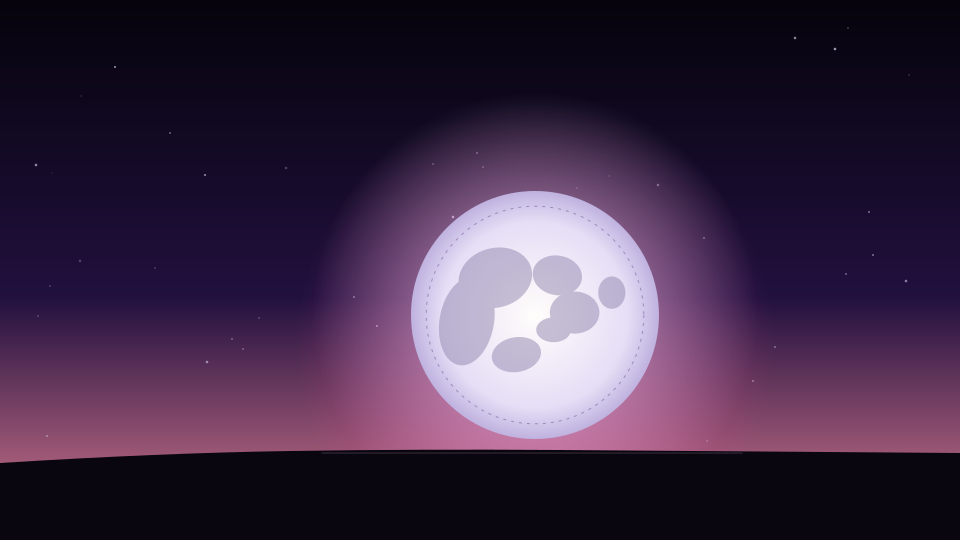
The full Moon of Tuesday, 24 November 2026 is a supermoon. The U.S. Naval Observatory puts the exact moment of full Moon at 14:53 UTC, and NASA lists it as a supermoon and the first of three in a row, followed by the full Moons of December 2026 and January 2027. At that moment the Moon is about 360,800 km from Earth.
When to look
Full Moon is an instant, but to the eye the Moon looks full for about a day either side. For most people the best view is the evening of 24 November: NASA suggests looking east around sunset to watch it rise. In the Americas the exact full Moon falls in the morning of 24 November (08:53 in Costa Rica, 09:53 in New York), so moonrise that evening is the natural moment to watch. In Europe, Africa and most of Asia it falls in the afternoon or evening of the 24th.
| Full Moon (UTC) | Distance from Earth | Note |
|---|---|---|
| Nov 24, 2026, 14:53 UTC | 360,800 km | First of the series |
| Dec 24, 2026, 01:28 UTC | 356,700 km | Closest full Moon of 2026 |
| Jan 22, 2027, 12:17 UTC | 357,600 km | Closest full Moon of 2027 |
What makes it a supermoon
The Moon’s orbit is slightly oval. On 25 November at 21:02 UTC it reaches perigee, its closest point on this orbit, about 359,300 km away and roughly 30 hours after full Moon. Because full Moon and perigee fall so close together, this full Moon is nearer than average.
“Supermoon” is not an official astronomical term. NASA uses it for a full Moon within at least 90 percent of perigee and notes that the closest full Moons can look up to 14 percent bigger and 30 percent brighter than the year’s faintest one. In practice the size change is hard to judge by eye, while the extra brightness is easier to notice.
Tips for a better view
- Find a spot with a clear, low eastern horizon and arrive before sunset.
- Watch the first half hour after moonrise, when buildings or trees give the Moon something to be compared with.
- The rising Moon may look huge, but NASA explains that this is the Moon illusion, which affects every full Moon.
- For photos, set the exposure manually and use some zoom; the bright Moon fools automatic settings.
NASA adds that supermoons can bring slightly higher tides than usual, because the Moon is closer.
A note on astrology
This full Moon falls in the tropical sign of Gemini, which has its own story in Kosmo News. Astrology often treats a supermoon as an amplified full Moon, a moment that feels fuller and more vivid. That is symbolism layered on a real, measurable event: the astronomy above is what you can check, and the meaning is yours to take or leave.
Timing note: the U.S. Naval Observatory gives the full Moon at 14:53 UTC and NASA’s supermoon page at 14:54 UTC; the one-minute difference comes from rounding. Kosmo uses the Naval Observatory time for the phase and NASA for the supermoon label.